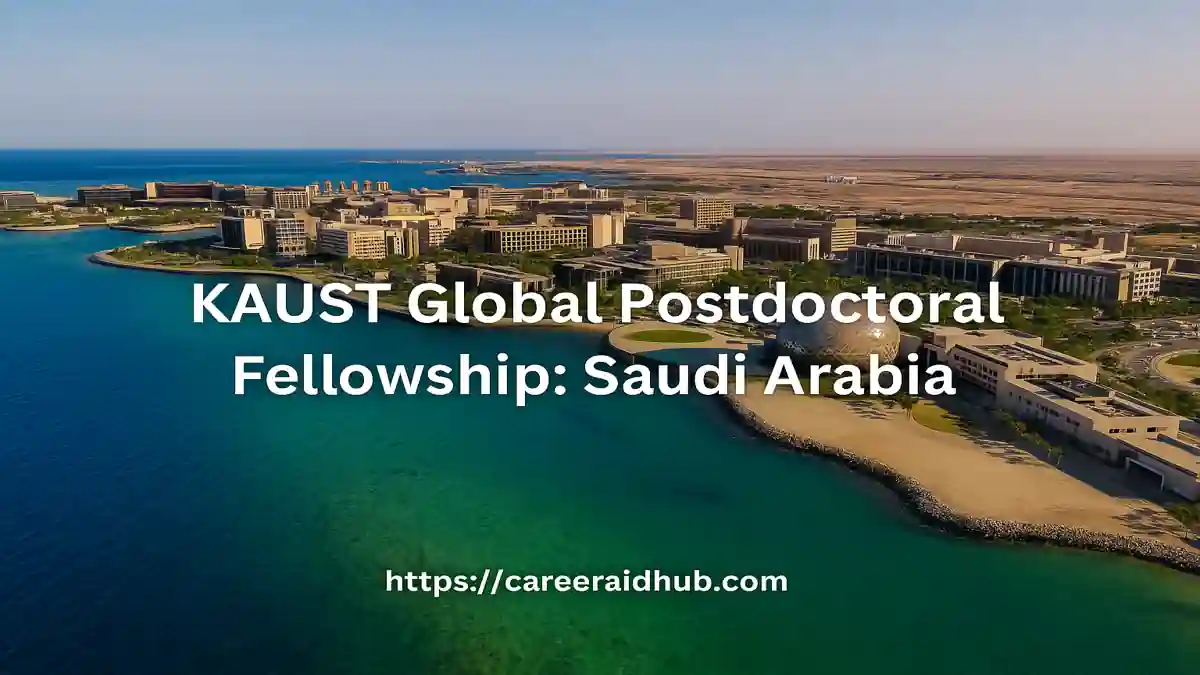
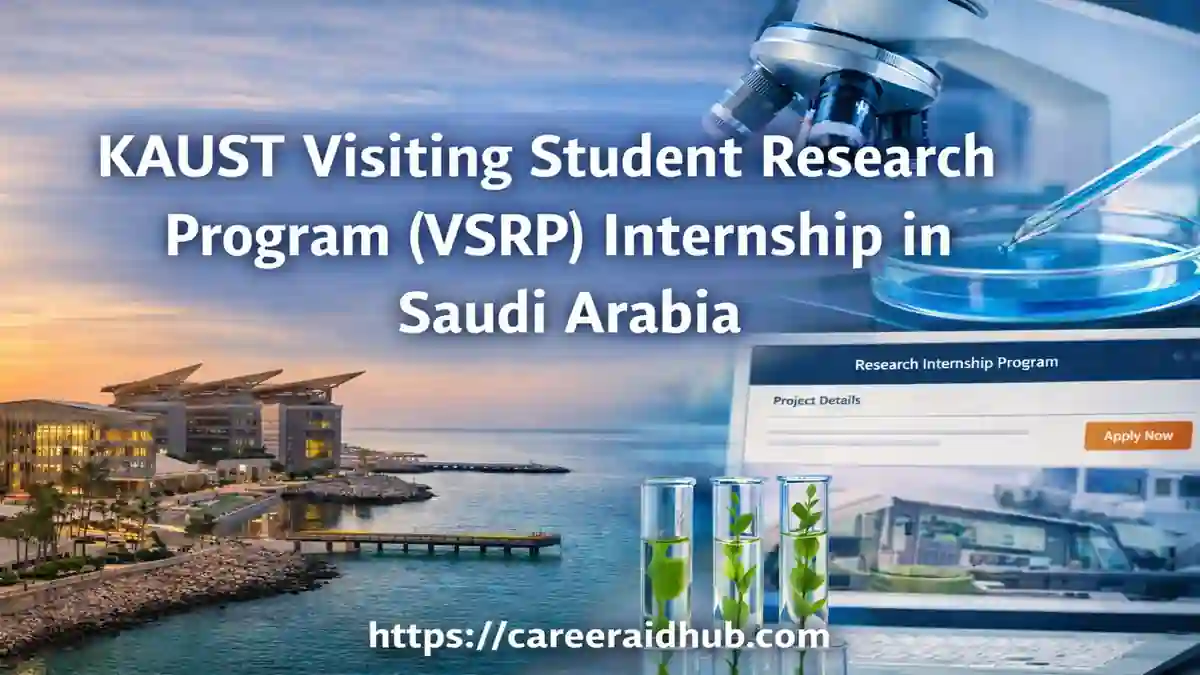
If you are looking for a KAUST Visiting Student Research Program (VSRP) internship in Saudi Arabia, you are exploring one of the more research-intensive internship routes available to high-performing STEM students. VSRP places visiting students into faculty-led research projects at King Abdullah University of Science and Technology (KAUST), with flexible start dates and structured academic mentoring. In this guide, you will learn what VSRP is, why it stands out, who can apply, what support is typically provided, and how to apply step-by-step using the official project listings and application process.
Introduction and Overview
VSRP is KAUST’s visiting research internship pathway for third- or fourth-year undergraduate students and master’s students who want hands-on experience in real research environments. Instead of a generic internship placement, you apply to specific research projects hosted by KAUST faculty. Therefore, your fit depends on your academic background, research interests, and readiness to contribute quickly in a lab, computational group, or interdisciplinary team.
Moreover, the program structure is attractive for applicants who want a strong research signal for future graduate admissions or research careers.
Why the KAUST VSRP Matters for Career and Graduate Admissions
Many internships help you “observe” research. In contrast, VSRP is designed to help you produce outcomes—skills, project deliverables, and sometimes conference or publication
Key benefits that matter in real applications
Firstly, VSRP aligns with what graduate committees and research hiring managers look for:
-
- Evidence of research readiness: You demonstrate that you can work with a supervisor, follow research methods, and meet deadlines.
- A credible faculty reference: A strong letter from a research mentor can change outcomes.
- Skill acceleration: You can gain lab techniques, simulation workflows, ML pipelines, or instrumentation experience faster than in a classroom setting.
- Clear narrative for your SOP: You can explain what problem you worked on, what you learned, and what you want next.
Secondly, the KAUST environment is highly international, which helps you build cross-cultural collaboration experience that employers increasingly value.
Eligibility and Who This Program Is For
VSRP is not meant for early undergraduates who are still exploring STEM broadly. Instead, it fits applicants who can start contributing with limited ramp-up time.
Eligible academic levels
According to the official KAUST internship information, VSRP is open to:
-
- Undergraduate students in 3rd year or above
- Master’s students
In addition, KAUST lists a minimum
Who is not eligible
KAUST also states that the following are ineligible:
-
- Current PhD candidates
- KAUST students
- KAUST alumni
English proficiency expectations
You should be prepared to work in English, since research discussions, documentation, and presentations typically happen in English. Some applicants may need to meet documented language requirements during evaluation, so plan early if you may need a test score or proof.
Key Features, Duration, and Typical Support
Duration and intake timing
One reason VSRP is widely searched is flexibility. KAUST states that internships typically run for 2 to 6 months, and the application deadline is year-round. That structure is helpful if your university calendar does not match a strict summer-only intake.
Research project model
Unlike many internships where you apply once and get assigned, VSRP is project-driven:
-
- You review active projects in the KAUST internship project listings.
- You apply to a specific project that matches your background.
- Selection depends on the faculty team’s needs, your profile fit, and timing.
Therefore, your strategy should focus on
Financial and campus support
KAUST indicates it covers key costs for selected interns, including tuition fees, housing, return flights, and a monthly stipend for living expenses. This is a practical advantage, because it reduces financial barriers that often limit research mobility.
Step-by-Step: How to Apply to the KAUST VSRP Internship
A strong application is not only “complete.” It is also targeted. Use this sequence to avoid common missteps.
Step 1: Shortlist projects with strong alignment
Start on the official project listings and filter using your strongest technical keywords (for example: computational modeling, catalysis, photonics, machine learning, marine systems, materials characterization, robotics, or energy storage). Then, shortlist 6–10 projects.
However, do not apply to unrelated projects just to increase your count. Faculty reviewers notice misalignment fast.
Step 2: Map your profile to the project needs
For each shortlisted project, write a quick match note:
-
- What exact skills do they want?
- Which of your courses, labs, or tools prove that skill?
- What result can you realistically deliver in 2–6 months?
This mapping becomes the backbone of your statement of purpose and your project-specific messaging.
Step 3: Prepare documents in a “research-first” format
KAUST lists core documents such as transcripts, a recommendation letter, passport validity, a statement
-
- CV: Put research skills, tools, and projects near the top.
- Statement of purpose: Focus on research fit, not only personal ambition.
- Transcript: Highlight technical depth and strong performance in relevant subjects.
- Recommendation letter: Choose a referee who can discuss research ability, not only attendance.
Step 4: Apply through the project page
KAUST explains that you apply directly through the project listing using the apply function on each project page. This means your application is evaluated in the context of that project’s needs.
Therefore, a project-specific SOP angle is not optional—it is your competitive edge.
Step 5: Plan timing like a professional
Even with year-round intake, practical constraints exist: visas, academic calendars, and lab schedules. As a result, applying earlier increases your chances of finding a project that matches your preferred months.
Tips, Common Mistakes, and Expert Advice
Tips that improve selection odds
-
- Show proof of skills, not only interest. Mention tools you have used (e.g., COMSOL, MATLAB, Python, TensorFlow, ANSYS, CAD, chromatography, microscopy, cleanroom protocols) only if you can defend them.
- Be specific about outcomes. Propose a small deliverable: a validated dataset, a simulation sweep, an experimental protocol run, or a benchmarked model.
- Keep your story consistent. Your CV, SOP, and project choice should reinforce the same research direction.
- Use a tight writing style. Faculty reviewers prefer clarity over drama.
Common mistakes to avoid
-
- Copy-pasting the project description into your SOP. That looks lazy and can trigger plagiarism concerns.
- Applying to too many unrelated projects. It signals uncertainty, not enthusiasm.
- Overclaiming expertise. If you say you are “advanced” at a tool, be ready to show outputs.
- Ignoring passport validity and document readiness. Administrative delays can cost you a slot.
A short scenario for Indian applicants
If you are applying from India, treat VSRP as a research credential builder for either (a) funded PhD applications abroad, (b) top-tier research roles, or (c) a stronger profile for competitive fellowships. Moreover, align your SOP with a clear next step—such as a master’s thesis topic, a PhD research question, or a focused industry R&D role.
Summary Table
|
Feature |
Details |
|
Program Name |
Visiting Student Research Program (VSRP) |
|
Host Country |
|
|
Funded By |
King Abdullah University of Science and Technology (KAUST) |
|
Duration |
2–6 months |
|
Study Mode |
Full-time, on-campus research internship |
|
Eligibility |
3rd year (or above) undergraduates and master’s students; minimum GPA 3.5/4; English proficiency required; PhD candidates/KAUST students/alumni not eligible |
|
Financial Support |
Monthly stipend for living expenses, housing, return flights, and tuition fees (as stated on official site) |
|
Fields of Study |
STEM disciplines aligned with KAUST degree programs; many projects are interdisciplinary |
|
Deadline |
Varies / All year round (rolling) |
|
Official Website |
Click here |
Conclusion
The KAUST Visiting Student Research Program is a research-first internship path built for serious STEM students who want to grow through real project work. It stands out because you apply to faculty-led projects, the timeline is flexible, and the official program terms indicate meaningful support such as housing, return flights, and a monthly stipend. Therefore, the best strategy is simple: choose projects with strong alignment, prepare research-focused documents, and apply early enough to match your academic calendar. Finally, use the official program guidelines and project listings as your single source of truth, and keep your application clear, specific, and evidence-based.
Frequently Asked Questions (FAQs)
KAUST states it covers key costs such as housing and return flights and provides a monthly living stipend, subject to program terms.
Yes. KAUST lists eligibility for undergraduate students in the third year or above, as well as master’s students.
No. KAUST lists applications as open all year round, although project availability can vary by faculty needs.
KAUST states the duration typically ranges from 2 to 6 months, depending on the project and timing.
Projects span KAUST’s STEM programs and frequently support interdisciplinary work, so you should choose based on project fit.
A strong SOP explains your project fit, relevant skills, and a realistic outcome you can deliver within the internship timeline.
Yes. Research outcomes and a strong mentor reference can strengthen graduate applications if you document your work well.
Premium Mentorship for a Stronger Application
- Premium Mentorship: personalised 1:1 guidance for this and similar opportunities
- In-depth review of your CV, academic profile, and key statements
- Aligned with international selection criteria so your profile matches what panels expect
- Stronger, more compelling narrative for highly competitive calls
- Step-by-step support from opportunity mapping to final submission (fee-based)